The House You Can’t Afford Anymore
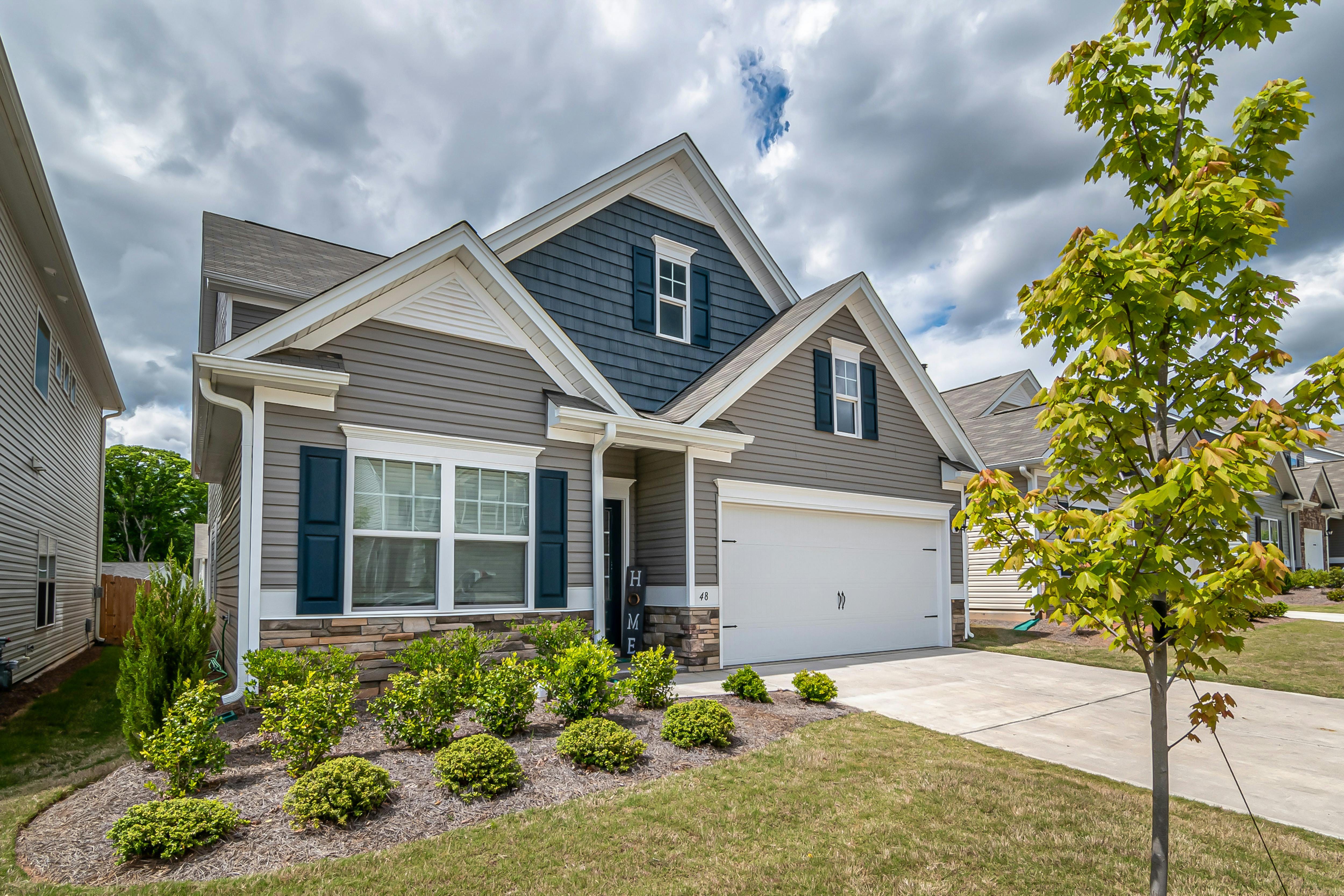
When I was growing up, the American Dream always included a home.
You know the image. The white picket fence. The yard. The front porch. A place that was yours — that no one could take from you. It was not just a house. It was the symbol of everything this country promised. Work hard, play by the rules, and one day you will have a place to plant yourself and build a life.
That image is still real to a lot of people here at home. The desire for it has not gone away. But the ability to reach it? That has become another story entirely. And somewhere between the promise and the price tag, the dream stopped being attainable for a whole generation of working families in this district.
Here is where we actually are.
The median home price in Orange County has crossed $1 million. In Riverside County — the newer part of this district — the median is around $600,000. Neither number is accessible to a working family trying to buy their first home. A 20% down payment on an Orange County home means coming up with $200,000 before you even walk through the door. In Riverside County it means $120,000. And then carrying a mortgage payment that, at current interest rates, runs thousands of dollars a month in either case.
Renters here at home are not doing better. Rental prices have climbed sharply over the past three years. Young families saving toward a down payment are watching that savings consumed by rent increases that arrive every twelve months. The people most squeezed are not the poorest — they have some protections. They are not the wealthiest — they can absorb the cost. They are the teachers, the firefighters, the small business owners, the young couples on dual incomes. The middle class this district was built for is the one being slowly pushed out of it.
And then there is the insurance crisis — which is now our crisis too.
The 2025 wildfires that tore through Southern California were a catastrophe for the entire state — more than 12,000 structures destroyed, billions in losses, communities that may never fully recover. That consequence changed the insurance landscape for every homeowner in California, including right here at home.
In the aftermath, State Farm was approved to raise rates by an average of 17% on roughly one million homeowner policies statewide. In the five years before those fires, more than 100,000 Californians had already lost their home insurance. The FAIR Plan — the insurer of last resort — more than doubled its enrollment in three years. And the Airport Fire in 2024 had already hit Orange and Riverside counties directly, triggering mandatory protections for approximately 580,000 policyholders in our own district. Homeowners here at home are opening renewal notices they didn’t budget for, calling agents who tell them their carrier is leaving California, and turning to a last-resort plan that was never designed to carry this load.
Here is the compounding problem: you cannot get a mortgage without homeowners insurance. When insurance becomes unavailable or unaffordable in a ZIP code, home sales stall, property values destabilize, and the dream of homeownership doesn’t just get harder — it starts to structurally collapse. This is not a warning about what might happen. It is a description of what is happening now.
What is being done — and what still needs to happen.
California Insurance Commissioner Ricardo Lara has taken real steps. His Sustainable Insurance Strategy now requires for the first time that insurers write and maintain coverage in wildfire-distressed areas, covering more than 1.5 million homeowners. New catastrophe modeling rules are bringing some carriers back. Nine new consumer protection laws took effect in January 2026 — faster claim payouts, expanded non-renewal protections, and a wildfire safety grant program. These are meaningful reforms. They are working, slowly.
But state action alone is not enough. And that is where Congress comes in — where I come in.
Congress needs to create a federal wildfire reinsurance backstop — modeled on the National Flood Insurance Program that already exists. When private insurers cannot sustainably price catastrophic risk, a federal backstop stabilizes the market and keeps coverage affordable for homeowners.
Congress should also tie federally-backed mortgages — FHA, VA, USDA — to home hardening standards. Fire-resistant construction lowers risk. Lower risk lowers premiums. That is the market-based lever Congress has and has not used.
And we need federal investment in wildfire mitigation at scale — forest management, controlled burns, community firebreaks — because the single most effective way to lower insurance premiums is to reduce the underlying risk. You cannot regulate your way to affordable insurance if the fire risk keeps growing. You have to address the fire risk.
What about the One Big Beautiful Bill? Let’s be honest about what it actually does.
The bill includes two housing provisions being promoted as wins. Let me tell you what they actually are.
First: the SALT deduction cap raised to $40,000. This sounds like relief for California homeowners. It is not relief for most people reading this. Here is what SALT actually is: a double tax. You earned income. Your state taxed it. Then the federal government taxes that same income again — as if the money you already handed to the state is still sitting in your pocket. For homeowners, it works the same way with property tax. You paid your county to fund local schools, roads, and fire departments. That money is gone. The federal government then taxes you as though you still have it. Same dollar, taxed twice. That is the injustice at the heart of this debate. And it is a real one. But here is what Congress did in 2017: they capped the SALT deduction not to fix that injustice — but to help pay for a $500 billion corporate tax cut. They limited what working homeowners could deduct in order to hand corporations a windfall. The BBB raised that cap slightly, but only about 13 million of 86 million homeowners even itemize enough to benefit — and the truly wealthy found a loophole through pass-through business entities that lets them avoid the cap entirely. The BBB raised the cap and left the loophole open. Renters pay property taxes too, built into their rent, and cannot deduct a dollar. Until this system is reformed honestly — not to benefit corporations, not to favor the wealthy — it remains a broken promise to the people who need relief most.
Second: the Low-Income Housing Tax Credit expansion. The program has built over three million units since 1986 — that is real. But research shows developers capture roughly half the subsidy in profits, units cost 20% more to build than standard construction due to layers of middlemen, and after 30 years the affordability requirements can expire entirely. Private equity firms have been buying these properties and finding loopholes to exit early, leaving tenants with nowhere to go. More units through LIHTC is a start — but without accountability reforms, it is largely a subsidy for developers, not a solution for families. And with current tariffs driving up the cost of lumber, steel, and building materials, every unit is getting more expensive to build before ground is even broken. We cannot expand affordable housing supply while simultaneously making construction costlier.
And none of this touches the most urgent barrier: there is no down payment assistance in this bill. No first-time homebuyer program. No direct help for the working families here at home who can afford a mortgage payment but cannot clear the barrier of $120,000 or $200,000 up front. The people most in need are still entirely on their own.
Meanwhile, the same bill adds $3.4 trillion to the national deficit. Deficit spending keeps upward pressure on interest rates. Mortgage rates do not move in isolation — they move with the cost of federal borrowing. A bill that adds to the deficit while offering modest housing provisions is not a housing solution. The math undermines the mission.
What I would actually do.
First, Congress can use federal infrastructure and transportation dollars to incentivize local zoning reform — rewarding communities that allow more dense, mixed-income, and workforce housing. Zoning decisions happen locally, but federal leverage can accelerate the change. This approach has worked. It can work here.
Second, we need real down payment assistance for working and middle-income families — not tax deductions that only help people who already own, but direct support for people trying to get in the door for the first time. First-generation homeowners, essential workers, young families: these are the people this district was built for, and they deserve a federal partner in this.
The housing dream is not gone. But it will not survive a Congress that passes tax documents and calls them housing policy, or elected officials who own multiple properties and vote against the programs that would help their constituents buy one. I came to this country with nothing. I know what it means to work toward something stable, something permanent, something yours. That is the most American aspiration there is — and it is worth showing up to protect.
Ballots arrive May 4. This is the moment to send someone who actually understands what is at stake.
With purpose and resolve —
Nina Linh
Independent Candidate, CA-40