What We Owe the Next Generation
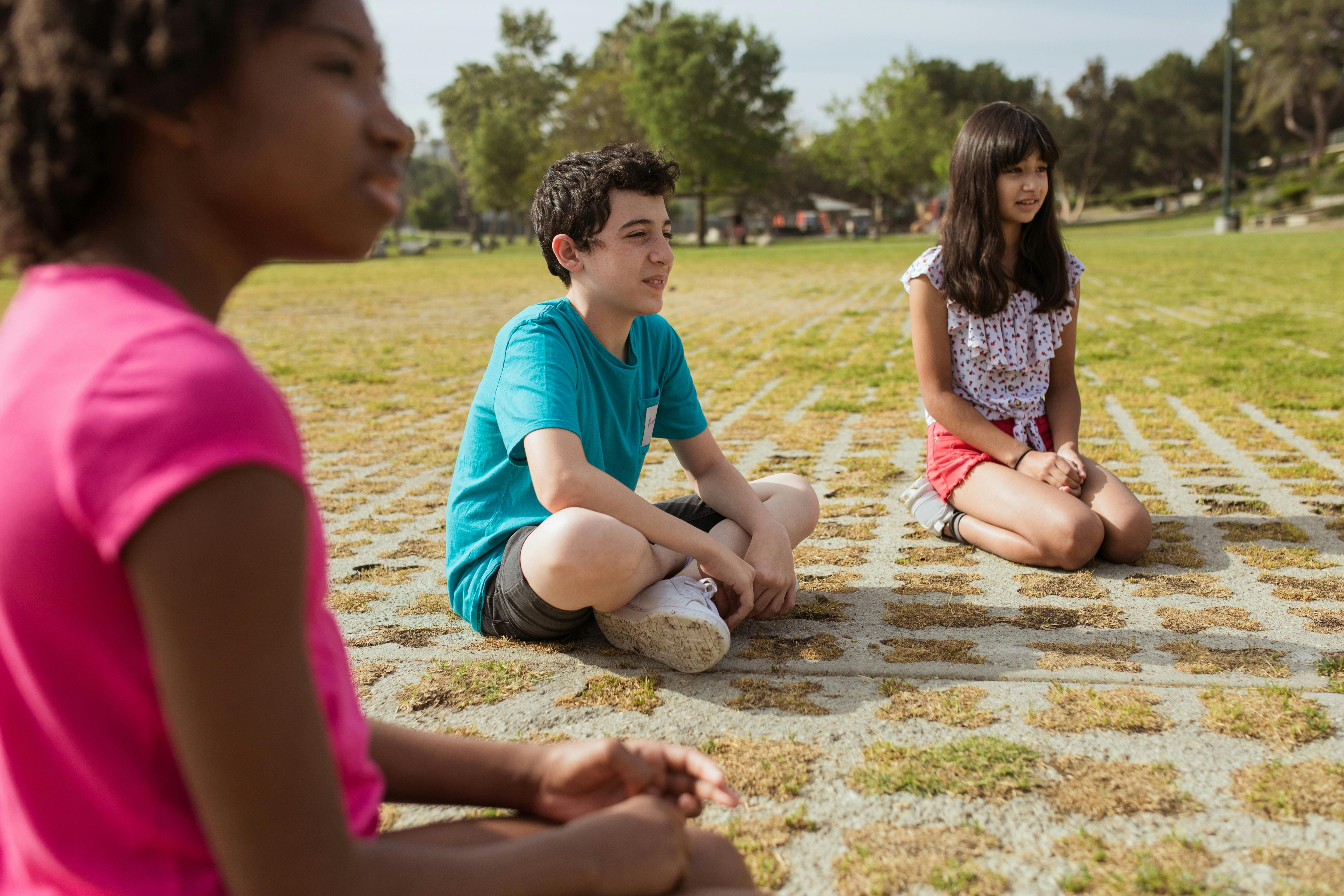
Public school was my lifeline.
I came to this country as a refugee. I did not speak the language. What I had was a classroom, a teacher who saw me, and a system that said: you belong here regardless of where you came from or what you have. Public education did not just teach me English. It gave me the tools to think, to question, to build something. It is the reason I am standing here today asking to serve in Congress.
That is why what is happening to our education system keeps me up at night. The system that saved me is failing too many children. The teachers who should be saving them are burning out and leaving. The resources that should be reaching every child are distributed by zip code and tax base, which means where you are born in this country largely determines what you get. That is not the promise of public education. That is the opposite of it.
Let me tell you what I know from the inside.
Before I ran for Congress, I co-founded an education subcommittee for a national think tank. I sat across from some of the finest minds in education policy and economics in this country. I helped draft a federal bill for education reform and walked the halls of Congress advocating for it. That work taught me something no campaign promise can replace: the problems in our education system are structural, they are old, and they will not be solved by a new textbook or another testing mandate. They require honest reckoning with how the system was built and who it was built for.
Here is the honest truth: our education system was designed over 100 years ago for an industrial economy that no longer exists. The school bell, the rigid schedule, the rows of desks, the standardized test, all of it reflects a world that ended before most of our parents were born. The economy our children are entering looks nothing like that. The jobs that will exist in ten years barely exist today. We are preparing children for a world we cannot fully see using a system designed for a world that is gone.
The teacher crisis is real and it is urgent.
On the campaign trail I met a teacher. She has been in the classroom for sixteen years at a public school here at home. She is the kind of teacher children remember for the rest of their lives, the kind who knows every student by name, who notices when something is off, who stays after school not because she is required to but because she cannot bring herself to leave when a child needs her. When I asked what she needed most, she did not say money, though she deserves far more of it. She said: support. Not just inside the classroom, she told me, but around it. She described showing up every morning as the first adult some of her students see. She is the one who notices the child who did not eat, the one whose home situation changed over the weekend, the one who is being bullied and hiding it. She is part teacher, part counselor, part social worker, part first responder. She does all of it because she loves these children. She does all of it largely alone. She told me teachers are not just educators. They are frontline workers. They are the first people in a child’s day who can recognize a crisis, respond to trauma, and make a child feel safe enough to learn. We do not treat them that way. We do not pay them that way. We do not support them that way. That has to change.
Nearly three out of four school districts struggled to fill qualified teacher positions in 2024-25. California has more than 10,000 unfilled positions, with 32,000 more filled by teachers not certified for what they are teaching. Teachers earn 26 percent less than other professionals with similar education. K-12 has the highest burnout rate of any industry. One in three teachers plans to leave within two years, not because they stopped loving children but because the system is asking more than any person can sustain on their own. We need federal loan forgiveness tied to years in high-need schools, competitive salary incentives for teachers in critical shortage fields, and in-classroom and wraparound support so that the teacher is not carrying the weight of an entire community alone.
The AI question is the one nobody in education is answering honestly.
Artificial intelligence is already changing how children learn, whether we plan for it or not. Students are using AI tools to write essays, solve problems, and generate answers. The conversation we should be having is not how to block AI from children. It is how to ensure that children develop the capacities that AI cannot replace.
Critical thinking. Emotional intelligence. The ability to ask the right question and know when an answer does not feel true. The ability to collaborate, adapt, and empathize. In an AI-driven economy, these are not soft skills. They are the only skills that cannot be automated. The children who thrive will be the ones who learned to think alongside AI, not the ones sheltered from it. Our curriculum, our assessments, and our teachers must develop these capacities in every child, not just the ones in well-resourced districts.
On school choice and public education, let me be direct.
School choice sounds like freedom, and for some families it delivers exactly that. A child thriving in a specialized program, a charter with an innovative model, a school aligned with a family’s values, these are real benefits. On the campaign trail I met a mother who home schools her three young children. Her husband works so she can dedicate herself fully to their education. She is organized, devoted, and deeply thoughtful. She made her case and I agreed with her. For her family, school choice is not a political position. It is a loving decision that is working. I told her so.
We can have school choice and strong public schools. The financial model exists. It works when choice means charters, magnets, and within-district options where funding follows the student inside the public system with full accountability. Los Angeles proved this with its own Zones of Choice program, which improved outcomes without draining district budgets. What does not work is unlimited private school vouchers paying for students already in private school. Arizona tried it and created a $1.3 billion budget shortfall. The difference is design and accountability. We can do this right. We just have to be honest about what that means.
Which brings me to why federal education standards are not optional.
Some states have the wealth to generate strong per-student funding on their own. Others do not, and federal education dollars are the difference between an adequately funded classroom and one that cannot afford a certified teacher. When leaders propose eliminating the Department of Education and leaving everything to states, they are describing a system where the accident of your birth state determines the quality of your education as completely as your family’s income once did. That is not freedom. That is geography as destiny. A national floor of standards and resources is not federal overreach. It is the only guarantee that equal opportunity means something in every state, not just the ones that can afford it.
A national floor does not mean a single curriculum imposed on every child. It means every child is guaranteed a certified teacher, a safe building, mental health support, and preparation for the actual world they are entering. States can exceed that floor. No state should be permitted to fall below it.
Education is not a budget line. It is a national investment with a guaranteed return. A better-educated workforce means a stronger economy, lower healthcare costs, stronger national security, and safer communities. Educational attainment is one of the strongest predictors of whether someone ends up in a career or a courtroom. When we underinvest in a child’s education, we do not save money. We pay the cost later, at a much higher rate, in emergency rooms, prisons, and lost human potential. The mother I met on the trail is investing everything she has in her children’s future. This country should match that commitment for every child, not just the ones with a devoted parent and a stable home.
My work in the LA County juvenile probation system showed me exactly what happens when we fail children early. The young people I sat with were not failures. They were the product of a system that did not invest in them soon enough. That is the case for investing in our kids. Every child we lose to that pipeline costs this society far more than the education ever would have. The bill always comes due. The question is whether we pay it in classrooms or in courtrooms.
Public school was my lifeline. Every child in this country deserves the same chance it gave me. That is not a Democratic value or a Republican value. It is an American one. The teacher I met is already giving everything she has every single day. The children in her classroom deserve a government that shows up with the same commitment.
Ballots arrive May 4th.
With belief in what we can be --
Nina Linh
Independent Candidate, CA-40